
Traditional Sauna vs Infrared Sauna: Which Is Better for Your Home?
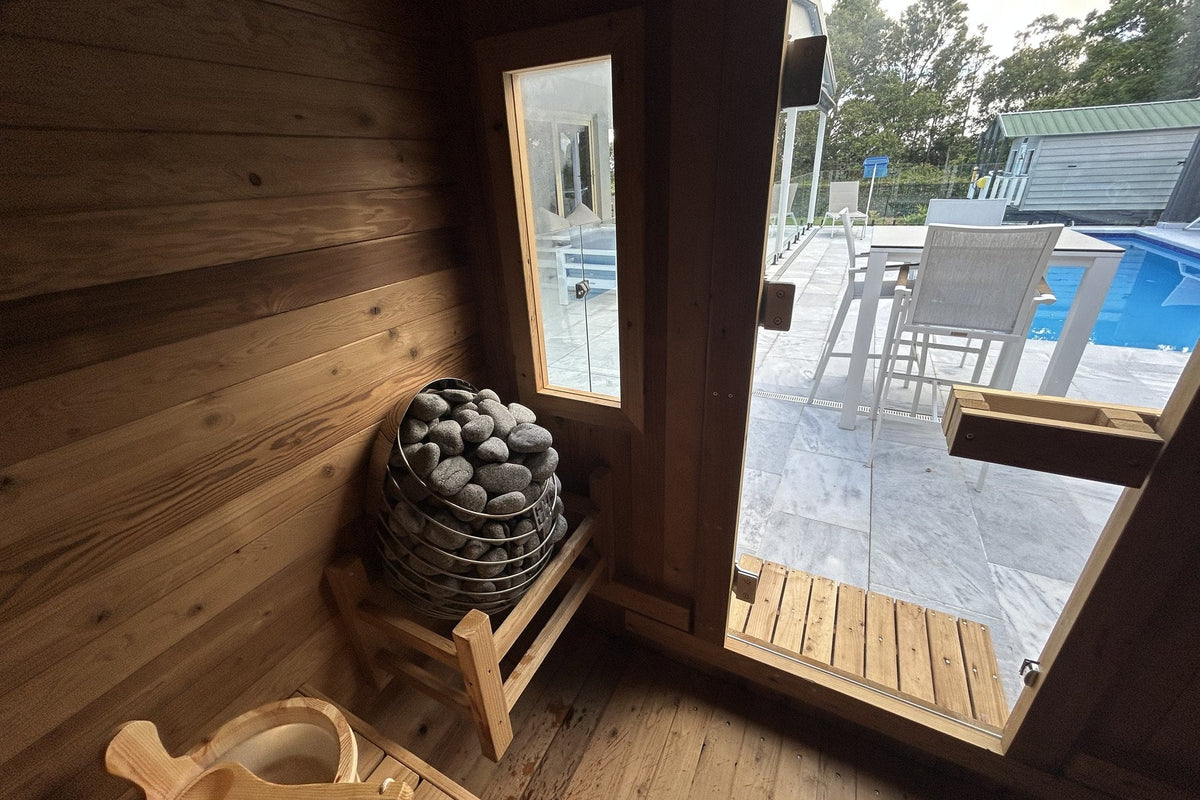
A traditional sauna heats the air with a heater and hot rocks and gives you real steam. An infrared sauna warms your body with panels at a much lower air temperature and has no steam.
Traditional saunas and infrared saunas are often sold side by side. They share a name but they work in completely different ways and give a very different experience. Here is how a traditional steam sauna compares with an infrared sauna so you can choose the right one for your home.
How a traditional sauna works
A traditional sauna heats the air inside a timber room. An electric heater warms a basket of hot rocks and the rocks radiate heat through the room. Ladling water over the rocks releases a wave of steam that the Finns call löyly. You control the feel of each session with the temperature and how much water you add. That is why traditional saunas are also called Finnish saunas, steam saunas or hot rock saunas.
How an infrared sauna works
An infrared sauna uses heating panels mounted on the walls. The panels give off infrared light that warms your body directly rather than heating the air around you. The room itself stays much cooler than a traditional sauna. There are no rocks, so there is no steam.
Traditional vs infrared sauna at a glance
| Traditional sauna | Infrared sauna | |
|---|---|---|
| How it heats | Heater and hot rocks heat the air | Panels warm the body directly |
| Air temperature | High heat that you can adjust | Much lower air temperature |
| Steam | Yes, from water on the rocks | No |
| Feel | Enveloping heat and humidity | A gentle warmth on the skin |
| Where it goes | Indoors or built to sit outdoors | Usually an indoor cabin |
Heat you can feel
For most people the biggest difference is the heat itself. A traditional sauna surrounds you with hot air and lets you turn up the intensity with steam. A Nova Sauna reaches 85°C in about 40 minutes. Heaters with a control panel go further and reach up to 110°C in about 60 minutes. An infrared sauna is designed to feel milder and works at much lower air temperatures.
Steam and the sauna ritual
Pouring water over hot rocks is central to a traditional sauna. It changes the feel of the room in seconds and gives every session a rhythm. Infrared saunas have no rocks and no steam. If the sauna you picture includes a ladle and a bucket, you are looking for a traditional sauna.
Indoors or outdoors
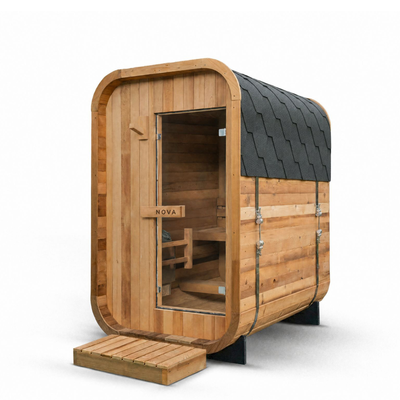
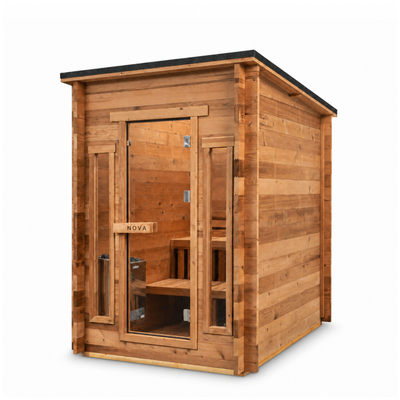
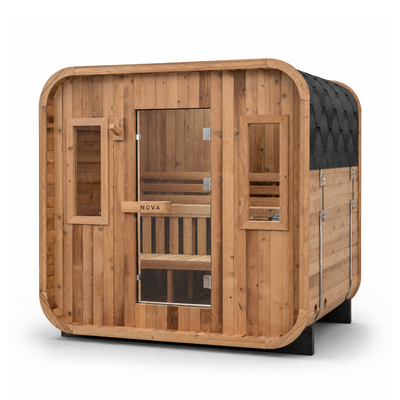
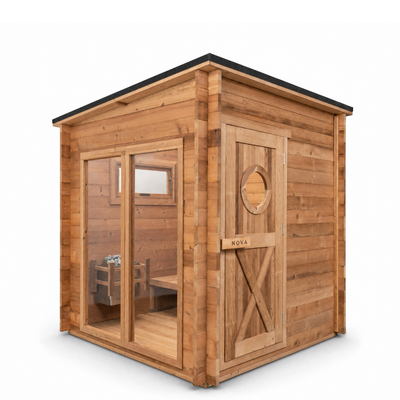
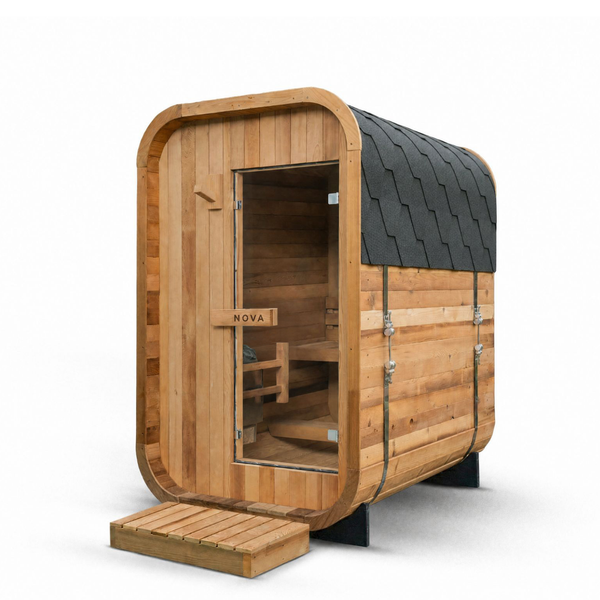
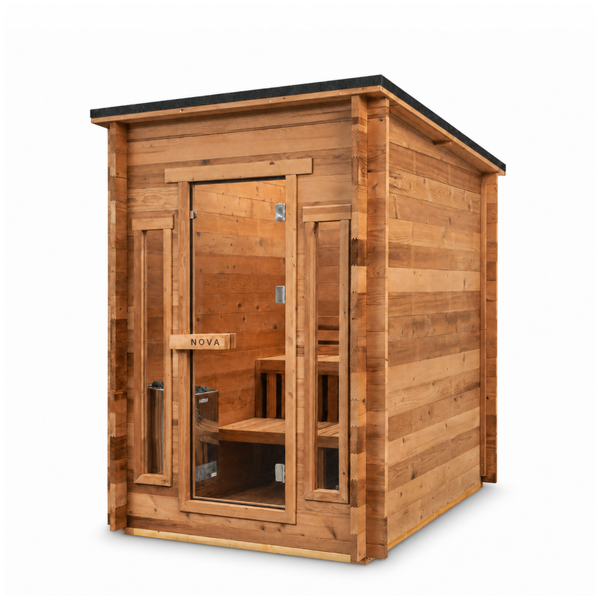
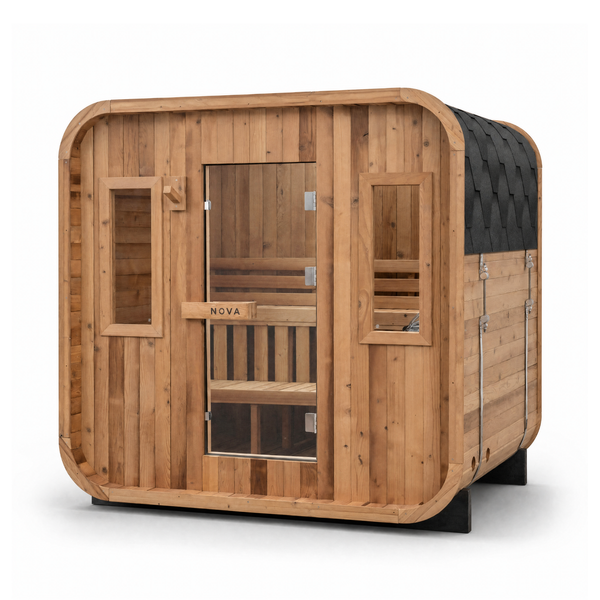
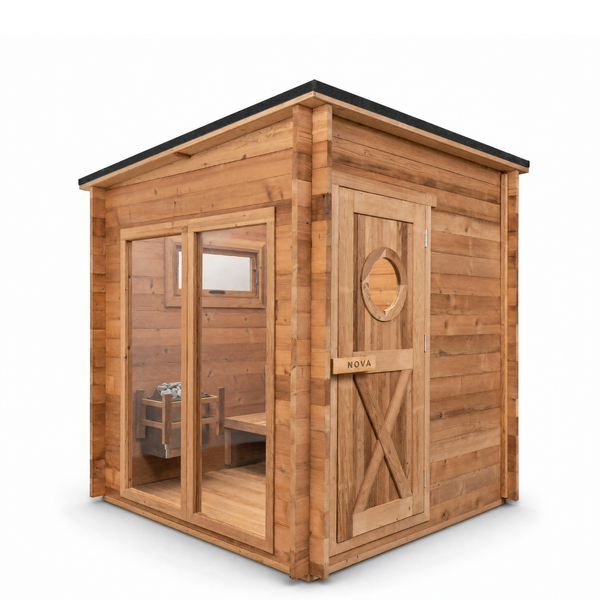
Most infrared saunas are compact cabins made to sit inside the house. A traditional sauna can be built as a standalone room in the backyard. Nova Saunas are traditional outdoor saunas made from 38mm thermally modified Canadian timber with weatherproof bitumen roof shingles. They are built to stay outdoors and fully exposed all year round.
Power and running costs
A traditional sauna heater is hardwired to your switchboard by a licensed electrician. A typical two-hour session costs around $2.15 to $2.80 in the 2 person Sauna Lite and $3.20 to $4.20 in the 4, 6 and 8 person models at average Australian electricity rates. See our guide to sauna running costs in Australia for the full breakdown.
Which sauna is right for you?
Both styles will warm you up but they feel very different. An infrared sauna gives a gentle warmth inside a small indoor cabin. A traditional sauna gives you real heat, steam whenever you want it and full control over how intense each session feels. It is the original sauna that has been enjoyed in Finland for centuries.
If the sauna you picture is a timber room with hot rocks, a ladle of water and a cool down outside afterwards, a traditional sauna is the one to choose.
Nova only builds traditional outdoor saunas. Focusing on one thing lets us get the details right, from full-length Canadian timber to heaters sized for each room. When you are ready to compare models, start with our outdoor sauna buying guide.
Frequently asked questions
What is the difference between a traditional sauna and an infrared sauna?
A traditional sauna heats the air with an electric heater and hot rocks, and water on the rocks creates steam. An infrared sauna uses panels that warm your body directly at a much lower air temperature with no steam.
Is a hot rock sauna the same as a traditional sauna?
Yes. Traditional saunas are also called Finnish saunas, steam saunas or hot rock saunas because a heater warms a basket of rocks that you pour water over to create steam.
How hot does a traditional sauna get?
A Nova Sauna reaches 85°C in about 40 minutes. Heaters with a control panel can reach up to 110°C in about 60 minutes.
Can an infrared sauna go outside?
Most infrared saunas are designed as indoor cabins. Nova builds traditional outdoor saunas that are made to stay outdoors and fully exposed all year round.
Find your Nova Sauna
Keep reading
 How to Care for Your Outdoor Sauna: A Simple Maintenance Guide
Dry the sauna after every session and treat the interior benches with paraffin oil every 12 months. Oil the exterior every 12 months for Hemlock or every 16 to 24 months for Red Cedar.
Read guide Outdoor Sauna Electrical and Installation Requirements in Australia
An outdoor sauna heater must be hardwired to your switchboard on a dedicated circuit by a licensed electrician. The sauna needs a flat, level and stable base such as a concrete slab, tiles or a reinforced deck.
Read guide How Much Does It Cost to Run an Outdoor Sauna in Australia?
A typical two-hour session costs around $2.15 to $2.80 in the 2 person Sauna Lite and $3.20 to $4.20 in the 4, 6 and 8 person models at average Australian electricity rates. Your cost depends on heater size, session length and your electricity rate.
Read guideNot sure which sauna suits your space?
Talk to a Nova sauna specialist about sizes, heaters and installation.